
The 2026 Subaru Forester Hybrid
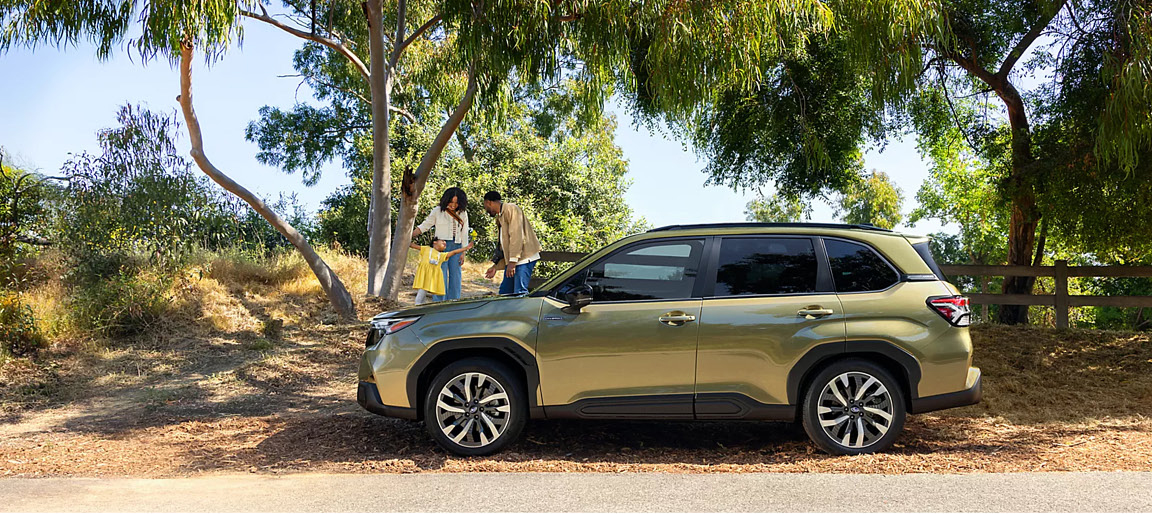
The 2026 Subaru Forester Hybrid: Everything Charleston, WV Buyers Need to Know
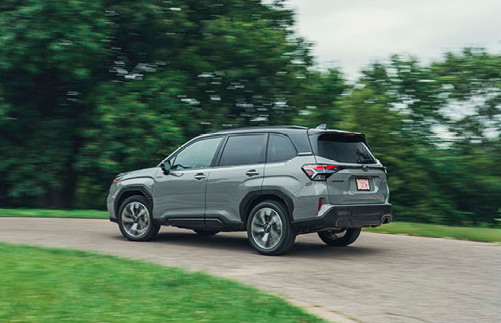
The 2026 Subaru Forester Hybrid combines a 2.5-liter Boxer engine with an electric motor to produce 194 horsepower, up to 40% better fuel economy than the standard Forester, and a range of up to 581 miles per tank — all with Subaru’s Symmetrical All-Wheel Drive standard on every trim.
If you’re a West Virginia driver who wants better fuel efficiency without giving up the AWD capability you rely on through winter, the Forester Hybrid was designed for exactly that. While most hybrid compact SUVs use an electric motor to power the rear wheels on demand, the Forester Hybrid keeps Subaru’s full-time, mechanical all-wheel-drive system — the same proven hardware that’s made Subaru a trusted name on WV mountain roads for decades.
This guide covers everything you need to know: how the hybrid system works, what each trim includes, fuel economy, capability on WV roads, safety features, and how it compares to the standard Forester. When you’re ready, you can explore the full Forester Hybrid lineup at Dutch Miller Subaru in Charleston.
Quick Specs: 2026 Forester Hybrid at a Glance
| Specs | 2026 Forester Hybrid |
|---|---|
| Engine | 2.5L Atkinson/Miller-cycle Boxer 4-cyl. + dual electric motors |
| Total Horsepower | 194 hp (14 more than standard Forester) |
| Transmission | Lineartronic CVT |
| Drivetrain | Symmetrical AWD (standard, all trims) |
| City / Highway MPG | 35 / 34 (EPA estimated) |
| Range Per Tank | Up to 581 miles |
| Ground Clearance | 8.7 inches |
| Passenger Volume | 106.6 cu. ft. |
| Cargo Space (seats up / max) | 27.5 / 69.1 cu. ft. |
| Safety | EyeSight Driver Assist + IIHS Top Safety Pick+ |
| Touchscreen | 11.6-inch with wireless Apple CarPlay & Android Auto |
| Available Trims | Premium, Sport, Limited, Touring |
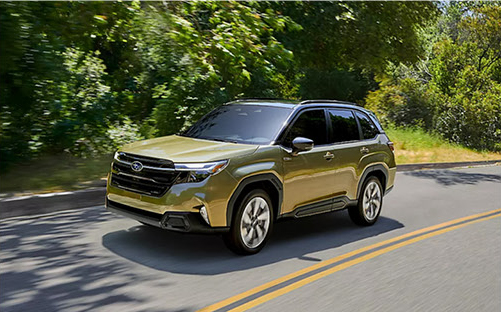
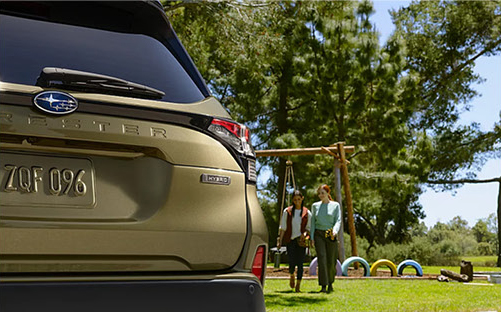
How Does the Forester Hybrid Powertrain Work?
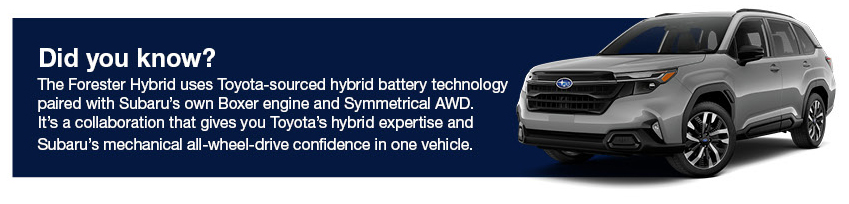
The Forester Hybrid isn’t a plug-in — you never need to charge it. It uses a series-parallel hybrid system that automatically switches between the gas engine, the electric motor, or both, depending on driving conditions. You fuel it like any regular vehicle.
Here’s what’s under the hood:
- 2.5-liter Atkinson/Miller-cycle Boxer engine — Subaru’s signature flat-four, mounted low for a lower center of gravity
- Two motor-generator units (MGUs) — one handles engine start/stop and battery charging; the other sends power to the wheels and recovers energy when braking
- 1.1-kilowatt-hour lithium-ion battery — compact, lightweight, and self-charging through regenerative braking
- Lineartronic CVT — optimized for both fuel economy and driving feel
The result is 194 combined horsepower — 14 more than the standard Forester — with significantly better fuel efficiency. At low speeds around town, the system can run on electric power alone. On the highway, the gas engine and electric motor work together seamlessly. If you want to see how that powertrain feels in person, you can schedule a test drive at Dutch Miller Subaru anytime.
Fuel Economy: 40% Better Than the Standard Forester
This is the headline number — and it’s backed by EPA estimates. The Forester Hybrid delivers EPA-estimated 35 MPG city and 34 MPG highway. That’s approximately 40% better city fuel economy compared to the non-hybrid Forester’s 26 city / 29 combined.
What does that mean in practice for Charleston-area drivers?
- Up to 581 miles per tank — enough to drive from Charleston to Washington, D.C. and back without stopping for gas
- Fewer fill-ups on your weekly commute — if you drive 30 miles round-trip daily, you could go nearly four weeks between gas station visits
- Long-term savings — the efficiency gap between 29 MPG and 34 MPG adds up to meaningful savings per year at current gas prices
And unlike some hybrid competitors that sacrifice AWD for efficiency, the Forester Hybrid keeps Subaru’s full-time Symmetrical All-Wheel Drive standard on every trim. You don’t trade capability for MPG — you get both.
AWD That Actually Works in West Virginia Winters
This is where the Forester Hybrid separates itself from the rest of its class.
Most hybrid competitors — including the Toyota RAV4 Hybrid and Honda CR-V Hybrid — use an electric motor to send power to the rear wheels when traction is needed. It works, but it’s a reactive system that kicks in after your wheels start to slip.
The Forester Hybrid uses Subaru’s mechanical Symmetrical All-Wheel Drive with a power transfer unit, a physical driveshaft, and a traditional rear differential. Power goes to all four wheels all the time — through actual hardware, not software decisions.
For West Virginia drivers, that distinction matters:
- Full-time AWD means you have traction before conditions get bad, not after
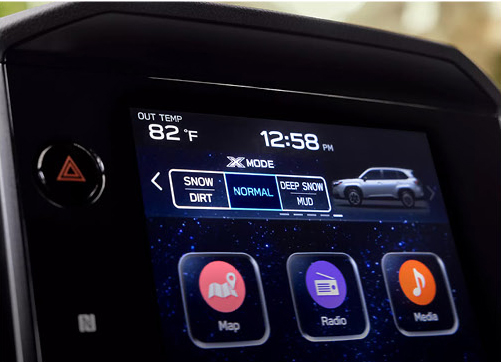
- X-MODE optimizes throttle and braking for snow, ice, and mud — standard on all trims
- Active Torque Vectoring distributes power to the wheels with the most grip through corners
- 8.7 inches of ground clearance handles unplowed mountain roads and deep snow with confidence
If your commute takes you through the hills around Teays Valley, down Corridor G, or across the Kanawha Valley in January, you need AWD that doesn’t think about it — it just does it. The Forester Hybrid also includes SI-Drive, Subaru’s performance management system, which lets you toggle between Intelligent mode for maximum fuel efficiency and Sport Sharp mode for quicker throttle response on steep mountain grades.
What Comes Standard on Each Trim?
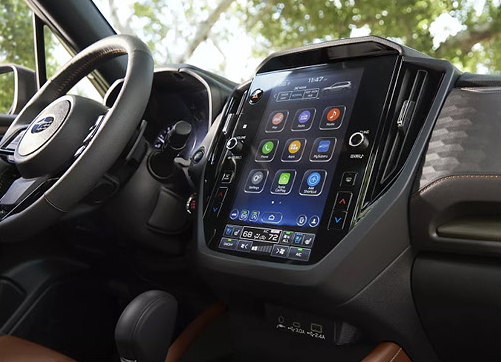
The Forester Hybrid is available in four trims. All of them include Symmetrical AWD, the 194-hp hybrid powertrain, EyeSight Driver Assist Technology, and an 11.6-inch touchscreen with wireless Apple CarPlay and Android Auto.
Here’s where they differ:
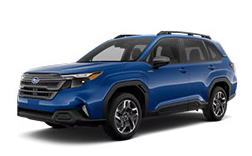
Premium Hybrid
The entry trim, but packed with features:
- Heated front seats
- Panoramic moonroof
- 11.6-inch touchscreen with navigation
- 12.3-inch digital gauge cluster
- Blind spot detection and rear cross-traffic alert (standard)
- Roof rails
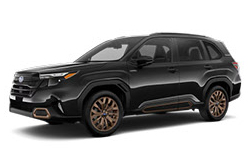
Sport Hybrid
Adds a sportier look and feel:
- Unique interior and exterior styling accents
- StarTex synthetic leather upholstery (durable and animal-free)
- Harman Kardon premium audio system
- 12.3-inch digital gauge cluster
- Sport-tuned suspension
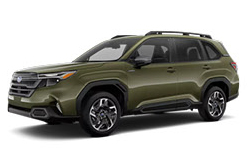
Limited Hybrid
Upgraded comfort and convenience:
- Power-adjustable front passenger seat
- Rain-sensing windshield wipers
- Upgraded interior materials
- All features from Premium and Sport
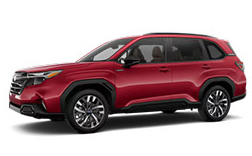
Touring Hybrid
The fully loaded option:
- Genuine leather upholstery
- Ventilated front seats
- Heated rear outboard seats
- Surround-view camera system
- DriverFocus Distraction Mitigation System
Every trim comes ready for West Virginia’s conditions out of the box. You don’t need to add packages or check option boxes to get AWD, safety tech, or heated seats — those are included from the start. If you’re not sure which trim fits your needs, the team at Dutch Miller Subaru can walk you through the differences in person.
Safety: Top Ratings and Features That Matter on Mountain Roads
The 2026 Forester has earned an IIHS Top Safety Pick+ designation and an overall 5-star rating from NHTSA. The hybrid model shares the same safety structure and full suite of features.
Every Forester Hybrid includes EyeSight Driver Assist Technology standard, with features specifically useful on West Virginia’s winding, two-lane roads:
- Advanced Adaptive Cruise Control with Lane Centering — helps maintain safe following distance and keeps you centered in your lane, even through curves
- Pre-Collision Braking — detects vehicles, pedestrians, and cyclists, and can apply brakes automatically if a collision risk is detected
- Lane Departure and Sway Warning — alerts you if you drift, which matters on narrow mountain roads where there’s little margin for error
- Emergency Stop Assist — a Subaru first: if the driver becomes unresponsive while using adaptive cruise control, the system can stop the vehicle, activate hazard lights, unlock the doors, and initiate a call to emergency services through STARLINK Connected Services
That last feature is especially relevant for WV drivers who spend time on rural roads where help may not be immediately nearby.

Forester Hybrid vs. Standard Forester: Is the Hybrid Worth It?
If you’re deciding between the two, here’s the honest comparison:
What the Hybrid gives you over the standard Forester:- 14 additional horsepower (194 vs. 180 hp)
- Approximately 40% better city fuel economy
- Up to 581 miles of range per tank
- Standard blind spot detection and rear cross-traffic alert on all trims
- Emergency Stop Assist
- Quieter cabin with additional sound-deadening
- Active Torque Vectoring standard
- Symmetrical AWD standard
- 8.7 inches of ground clearance
- EyeSight Driver Assist standard
- Same exterior dimensions
- Same practical, squared-off Forester design
- The Hybrid is only available in Premium, Sport, Limited, and Touring trims — there’s no base hybrid trim
- The Hybrid weighs approximately 295 pounds more due to the battery and electric components
- Cargo space is 27.5 cu. ft. behind the rear seats and 69.1 cu. ft. max (all hybrid trims include a panoramic moonroof, which slightly reduces cargo volume compared to the Base gas model)
For most drivers, the hybrid is worth the investment. The fuel savings compound over time, you get more power, and the additional standard safety features add genuine value. If you’re keeping your Forester for five or more years — as many Subaru owners do — the efficiency gains pay for themselves. And if you’re considering trading in your current vehicle to make the switch, you can check its value with an instant trade-in offer before your visit.
Why the Forester Hybrid Fits West Virginia Drivers
Most hybrid SUVs are designed for suburban commuters on flat, well-maintained roads. The Forester Hybrid is designed for drivers who also deal with mountain grades, unpredictable weather, and roads that don’t always get plowed on time.
It’s the combination of factors that makes it work here:
- Mechanical AWD handles WV winters without compromise
- 8.7 inches of ground clearance clears snow, gravel, and rough roads
- 581 miles per tank means fewer stops on long stretches between Charleston and Huntington, or up to Morgantown
- X-MODE gives you extra traction control when conditions deteriorate
- Boxer engine’s low center of gravity improves stability through the curves on US-60, US-19, and the WV Turnpike
The Forester Hybrid doesn’t ask you to choose between being efficient and being capable. For a state where “mountain roads” isn’t a weekend hobby but a daily reality, that matters. If you want to see where the numbers land for your budget, you can get pre-approved for financing in just a few minutes before you visit.
Frequently Asked Questions
No. The Forester Hybrid is a self-charging hybrid, not a plug-in. The battery recharges through regenerative braking and the gas engine. You fuel it like any regular vehicle — no charging station or outlet required.
The 2026 Forester Hybrid achieves EPA-estimated 35 MPG city and 34 MPG highway. That’s approximately 40% better city fuel economy compared to the standard Forester, with a range of up to 581 miles per tank.
Yes. Every 2026 Forester Hybrid trim includes Subaru’s Symmetrical All-Wheel Drive standard. Unlike many competitors that use an electric motor for rear-axle power, the Forester Hybrid uses a full-time mechanical AWD system with a physical driveshaft and rear differential.
The Forester Hybrid is available in four trims: Premium, Sport, Limited, and Touring. All include the 194-hp hybrid powertrain, Symmetrical AWD, EyeSight Driver Assist, and an 11.6-inch touchscreen with wireless Apple CarPlay and Android Auto.
Yes. The Forester Hybrid’s full-time Symmetrical AWD, X-MODE with snow/ice optimization, and 8.7 inches of ground clearance make it well-suited for winter driving. The system delivers power to all four wheels continuously, not just when traction is lost.
Yes. Dutch Miller Subaru at 1901 Patrick Street Plaza in Charleston has the Forester Hybrid in stock. You can schedule a test drive online or call (304) 340-4500.
The biggest difference is the AWD system. The Forester Hybrid uses a full-time mechanical AWD system, while the RAV4 Hybrid uses an electric motor to power the rear wheels on demand. The Forester also offers more passenger volume and ground clearance. The RAV4 Hybrid has a fuel economy advantage.