
2026 Subaru Forester vs. Toyota RAV4
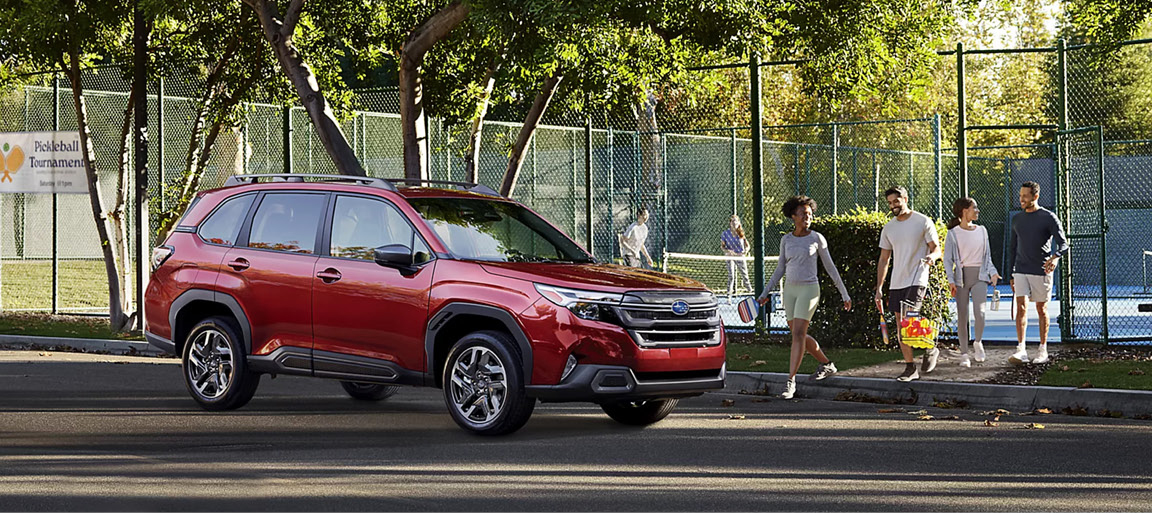
If you're shopping for a compact SUV in the Charleston, WV area, the Subaru Forester and Toyota RAV4 are probably on your short list - and for good reason. Both are reliable, well-built, and popular across West Virginia. But they're built on very different philosophies, and those differences matter when you're driving mountain roads and dealing with unpredictable winter weather.
Here's the short version: the 2026 Forester comes with standard all-wheel drive on every single trim. The RAV4 still offers front-wheel drive as the base configuration, and while it's now an all-hybrid lineup for 2026, AWD is an upgrade — not a given. For West Virginia drivers, that distinction alone is worth a closer look.
This guide breaks down the specs, features, and real-world capability of both SUVs so you can decide which one earns a spot in your driveway. We'll cover AWD systems, ground clearance, cargo space, safety tech, fuel efficiency, and off-road readiness - everything that matters when your daily commute includes routes like 1-64 and Corridor G.
At a Glance: Forester vs. RAV4 Quick Specs
Want to see the Forester's specs in person? You can explore the full 2026 Forester lineup at Dutch Miller Subaru in Charleston anytime.
Is the Subaru Forester or Toyota RAV4 Better in Snow?
This is where the Forester pulls ahead for West Virginia drivers — and it's not close.
Every Forester comes standard with Subaru's Symmetrical All-Wheel Drive. It's a full-time system that continuously distributes power to all four wheels. It doesn't wait for your tires to slip before kicking in — it's always working.
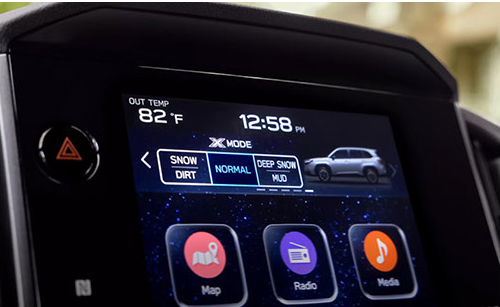
Pair that with X-MODE, and you've got a system that's built for the kind of weather we see from November through March. Here's what that means in practice:
- Symmetrical AWD sends power to all four wheels continuously — no waiting for sensors to detect slip
- X-MODE optimizes throttle and braking automatically for snow, ice, and mud
- Hill Descent Control holds your speed steady on steep WV grades without riding the brakes
- Low center of gravity from the Boxer engine improves stability through curves on mountain roads
The RAV4 takes a different approach. Its hybrid AWD system uses an electric motor to power the rear wheels when extra traction is needed. It's effective on wet roads, but it's a reactive system - it responds to slip rather than preventing it. And if you choose the base FWD RAV4, you're getting zero rear-wheel power in winter conditions.
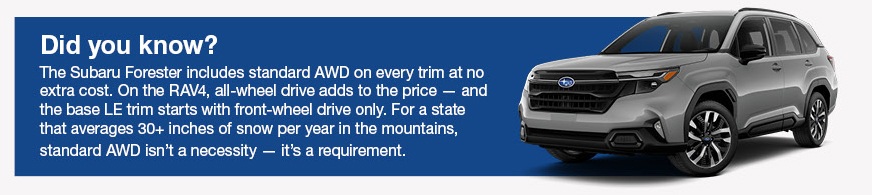
If you've ever driven the West Virginia Turnpike during a February snowstorm, or navigated the hills around Teays Valley after an ice event, you know that part-time traction isn't enough. The Forester's always-on AWD system gives you confidence before the road gets bad, not after.
Which Has More Ground Clearance for WV Mountain Roads?
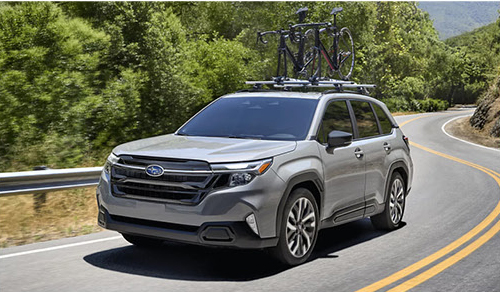
Ground clearance determines whether you can handle unplowed roads, construction zones, and the kind of rough terrain that's common across rural West Virginia. Here, the Forester wins again:
- Forester (standard): 8.7 inches across most trims
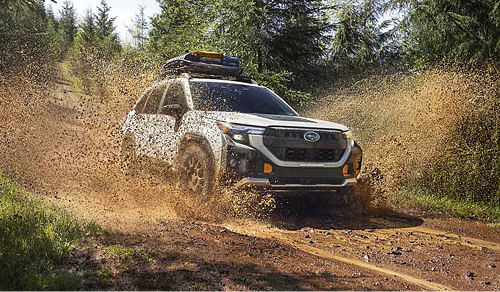
- Forester Wilderness: 9.2 inches — one of the highest in the compact SUV class
- RAV4 (standard): 8.1 inches on most trims
- RAV4 Woodland: 8.5 inches
That 0.6-inch gap between a standard Forester and a standard RAV4 may not sound like much on paper. But on an unplowed mountain road or a rutted gravel path heading to a trailhead, that half-inch is the difference between clearing the obstacle and hearing a scrape underneath your vehicle.
The Forester also benefits from Subaru's Boxer engine, which sits lower in the chassis than a conventional inline engine. This creates a lower center of gravity, improving stability on winding routes like US-60 through the Kanawha Valley or US-19 heading south toward Fayette County.
How Does Cargo Space Compare?
This one isn't a clean sweep — it depends on how you use the space.
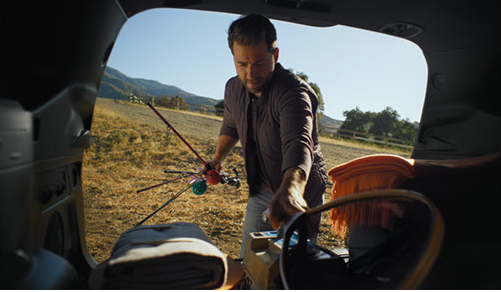
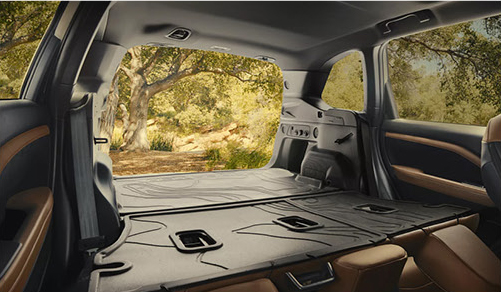
The RAV4 has more room behind the rear seats with the seats up (37.5 cu. ft. vs. 29.6 cu. ft.). If your typical load is groceries, backpacks, and daily essentials, the RAV4 gives you a slightly wider floor to work with.
But fold those rear seats down, and the Forester takes over. With 74.4 cubic feet of maximum cargo space versus the RAV4's 69.8, the Forester gives you nearly five extra cubic feet for road trips, moving gear, or loading up for a weekend at a West Virginia state park.
Where the Forester really dominates is passenger volume:
- Total passenger volume: 110.8 cu. ft. (Forester) vs. ~99.8 cu. ft. (RAV4) - roughly 11 cu. ft. more inside
- Rear legroom: 39.4 inches in the Forester gives back-seat passengers noticeably more stretch room
- Visibility: The Forester's taller roofline and larger windows offer a more open, panoramic feel — and better sightlines on WV's winding two-lane roads
If you're driving family through the mountains on a regular basis, that extra space adds up fast. And if you're considering trading in your current vehicle for something roomier, check what it's worth with an instant offer before your visit.
Fuel Efficiency: RAV4's Strongest Advantage
Let's be fair — the 2026 RAV4 wins on fuel economy, and it's not close.
Toyota completely redesigned the RAV4 for 2026, making the entire lineup hybrid. There's no gas-only option anymore. The result is impressive: AWD hybrid models deliver approximately 42-44 combined MPG. That's a significant advantage over the standard Forester's 29 combined MPG.
If fuel cost is your top priority, the RAV4 has a clear edge. Over 15,000 miles per year, that efficiency gap adds up.
However, the Forester now offers its own hybrid option — the Forester Hybrid — with a combined output of 194 horsepower and approximately 35 MPG combined. It narrows the gap significantly while maintaining Subaru's mechanical AWD system, which offers more consistent traction than the RAV4's electric-motor-based rear axle drive.

Safety Tech: EyeSight vs. Toyota Safety Sense
Both SUVs come with comprehensive safety suites, and honestly, you can't go wrong with either one. Here's what each includes standard:
Subaru EyeSight Driver Assist (standard on all Foresters):
- Adaptive cruise control with lane centering
- Pre-collision braking with pedestrian detection
- Lane departure and sway warning
- Dual-camera system (not radar) — effective in varied weather conditions
Toyota Safety Sense 4.0 (standard on all RAV4s):
- Dynamic radar cruise control
- Pre-collision braking with pedestrian/cyclist detection
- Lane departure alert with steering assist
- New Drive Recorder feature for 2026
Both Subaru and Toyota have strong safety track records, with previous model years earning top marks from IIHS and NHTSA. The real safety differentiator between these two? AWD. Having power at all four wheels at all times gives you more control in an emergency — especially on wet or icy roads. Standard AWD is standard safety.
Off-Road and Trail Capability
If weekend trips to Kanawha State Forest, the New River Gorge, or Seneca Rocks are part of your lifestyle, the Forester Wilderness is the clear pick.
Here's what the Wilderness trim adds over the standard Forester:
- 9.2 inches of ground clearance (vs. 8.7 standard)
- Front skid plate for underbody protection
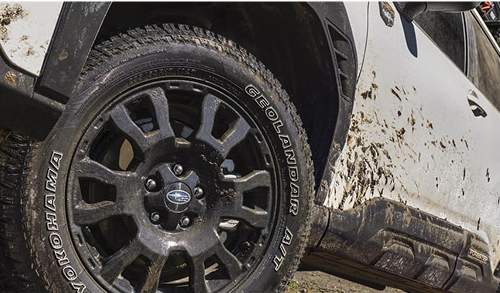
- Yokohama GEOLANDAR all-terrain tires
- Revised off-road suspension tuning
- Hill Descent Control for steep grades
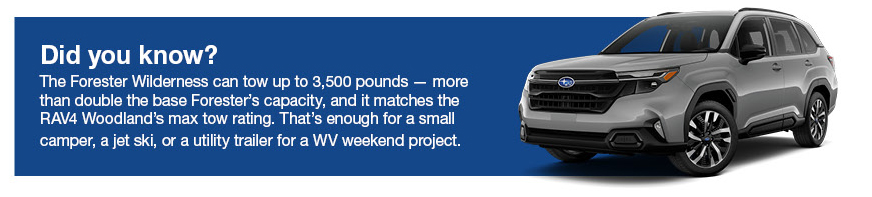
- 3,500-pound tow rating (vs. 1,500 standard)
Combined with Subaru's full-time Symmetrical AWD, these upgrades give the Wilderness genuine off-road confidence — not just a rugged look. The system is proactive, constantly distributing power to all four wheels whether you're on pavement, gravel, or mud.
The RAV4 Woodland is a solid contender with its own increased clearance (8.5 inches), all-terrain tires, and rugged styling. However, the RAV4's hybrid AWD relies on an electric motor to power the rear wheels on demand, which may offer less consistent traction on loose or uneven surfaces compared to the Forester's mechanical all-wheel-drive system.
Feature Comparison: What You Get Standard
The Forester delivers more standard equipment at its base level. Dual-zone climate control, roof rails, and X-MODE all come included — features that Toyota reserves for higher trims or optional packages. When you factor in that AWD is also standard, the Forester's base trim punches well above what the RAV4 LE offers out of the box.
So Which One Should You Buy?
Both are excellent SUVs. But for West Virginia, the Forester has the edge in the areas that matter most here.
Choose the Forester if:
- You want AWD standard on every trim — no upgrades, no compromise
- Ground clearance and off-road confidence are priorities
- You need maximum passenger and cargo space for family trips or outdoor gear
- You want a mechanical AWD system that works proactively, not reactively
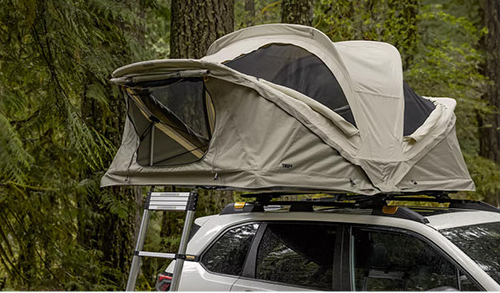
- Weekend adventures to WV's state parks, trails, and backroads are part of your routine
Choose the RAV4 if:
- Maximum fuel efficiency is your top priority
- You primarily drive in urban settings where FWD is sufficient
- You want the broadest range of hybrid and plug-in hybrid options
- A sportier driving feel matters more than off-road capability
For most drivers in the Charleston, Teays Valley, Hurricane, and Saint Albans areas, the Forester is the more capable everyday vehicle — especially from October through April when WV's weather is unpredictable.
The best way to decide? Drive them both. Dutch Miller Subaru has the full Forester lineup — including the new hybrid and Wilderness trims — ready for you to test drive. And if you want to see where the numbers land for your budget, you can get pre-approved in just a few minutes before you visit.
The Forester has the advantage for snow driving. It comes with standard Symmetrical All-Wheel Drive on every trim, paired with X-MODE for enhanced traction on snow and ice. The RAV4 offers AWD as an upgrade, and its electric-motor-based rear drive is reactive rather than continuous. For WV winters, the Forester's full-time AWD system provides more consistent confidence.
No. The 2026 RAV4 hybrid offers front-wheel drive as the base configuration on the LE trim. All-wheel drive is available across the lineup and standard on plug-in hybrid models, but it's not included on every trim. The Forester, by contrast, includes Symmetrical AWD on every model.
It depends on the configuration. The RAV4 has slightly more space behind the rear seats (37.5 vs. 29.6 cu. ft.). But with seats folded, the Forester offers more maximum cargo volume (74.4 vs. 69.8 cu. ft.) and significantly more passenger volume overall.
Yes. Toyota eliminated the gas-only RAV4 for 2026. The entire lineup is now hybrid or plug-in hybrid. This means better fuel efficiency across the board, with AWD models achieving approximately 42-44 combined MPG.
Yes. Dutch Miller Subaru at 1901 Patrick Street Plaza in Charleston has the full 2026 Forester lineup available, including hybrid and Wilderness trims. You can schedule a test drive online or call (304) 340-4500.
Yes. The 2026 Forester Hybrid is available in Premium Hybrid and Touring Hybrid trims. It combines Subaru's Boxer engine with an electric motor for approximately 194 combined horsepower and improved fuel efficiency, while keeping standard Symmetrical AWD. Browse hybrid inventory here.
Subaru's Symmetrical AWD is a full-time, mechanical system that continuously sends power to all four wheels through a physical drivetrain. Toyota's hybrid AWD uses an electric motor to power the rear wheels when extra traction is detected. Subaru's system is proactive (always on), while Toyota's is reactive (engages when needed).
Interested in the hybrid option? Read our complete guide to the 2026 Subaru Forester Hybrid
Wondering what your current vehicle is worth? Get an instant trade-in offer from Dutch Miller Subaru